
EV Sensor Calibration After Collision Repair: Technology Requirements Winter Garden Drivers Should Know
Winter Garden, United States - February 4, 2026 / Windermere Collision Center /
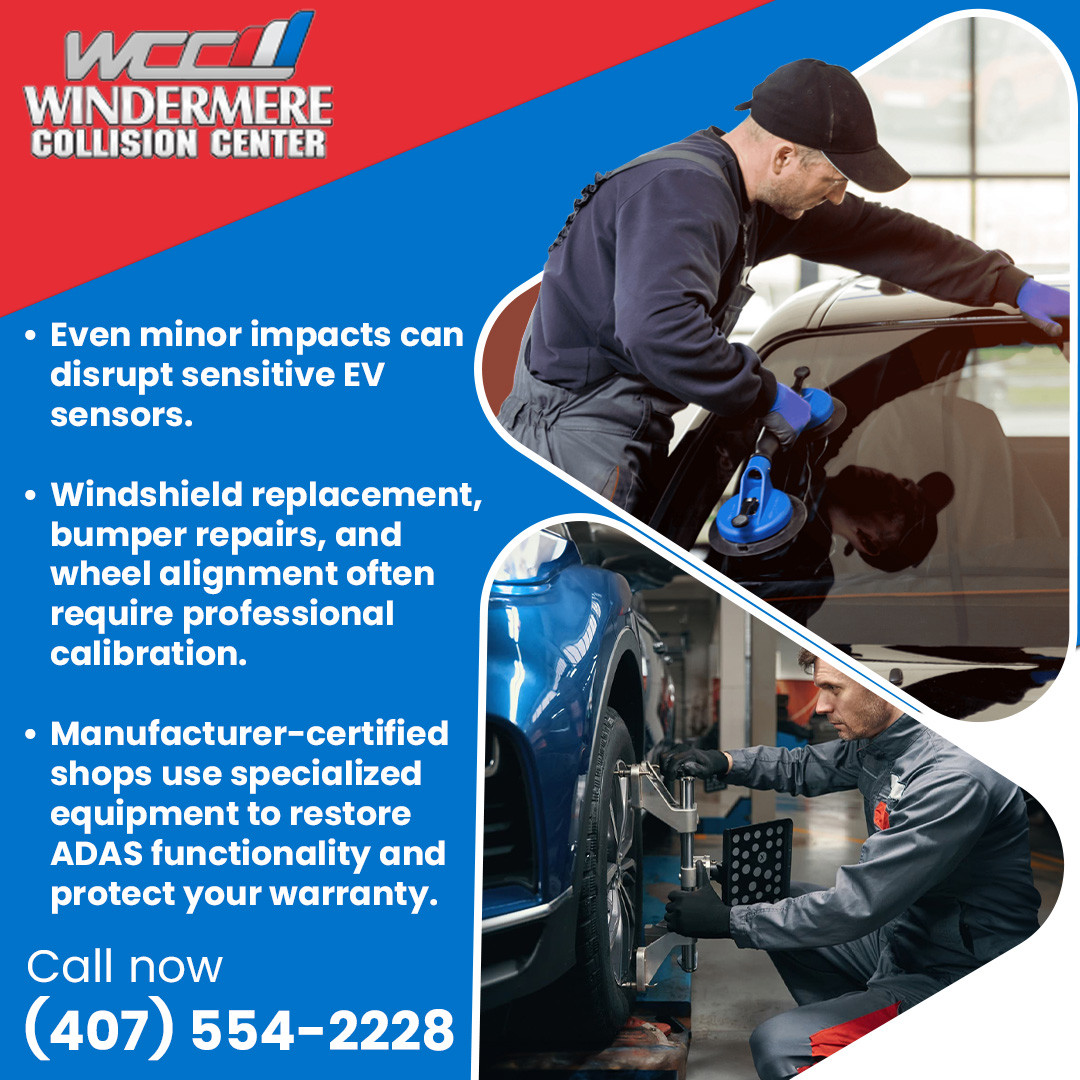
Winter Garden, FL – Electric vehicle owners in Central Florida now require specialized sensor calibration technology after collision repairs to restore advanced driver assistance systems to factory specifications. Even minor impacts can misalign sophisticated camera arrays, radar sensors, and ultrasonic detection systems that control critical safety features, making professional calibration a technical necessity rather than an optional service.

Modern electric vehicles integrate extensive sensor networks throughout body panels, windshields, and bumper assemblies that demand precise realignment following any collision work. Windermere Collision Center reports increasing demand for manufacturer-certified calibration services as EV ownership expands across Winter Garden and surrounding communities. Understanding calibration requirements, certification standards, and associated costs helps local drivers protect both their vehicle's safety systems and resale value.
Critical Sensor Systems Requiring Post-Collision Calibration
Electric vehicles rely on Advanced Driver Assistance Systems positioned strategically across the vehicle's exterior. When collision forces disrupt sensor positioning by even fractions of an inch, the entire safety network can provide inaccurate data to onboard computer systems.
According to AAA automotive research, sensor misalignment of just one degree can cause the system to monitor an area significantly off-axis 50 or more feet down the road. This misalignment affects automatic emergency braking, lane-keeping assistance, and adaptive cruise control functions that drivers depend on daily.
Impact zones triggering calibration requirements include:
Windshield replacement affecting forward-facing cameras
Bumper repairs disturbing radar sensors and ultrasonic parking arrays
Suspension work or wheel alignment shifting sensor angles
Battery system repairs, resetting electronic modules controlling sensor functionality
A Tesla Model 3 uses eight surround cameras, twelve ultrasonic sensors, and forward-facing radar, all of which require calibration after front-end, side, or windshield repairs. Electric powertrains allow manufacturers to dedicate additional electrical capacity to safety systems, resulting in more extensive sensor arrays than comparable gas vehicles.
Professional Calibration Methods and Technology Requirements
Certified facilities specializing in EV collision repair in Winter Garden employ two primary calibration methods to restore sensor accuracy.
Static Calibration Process
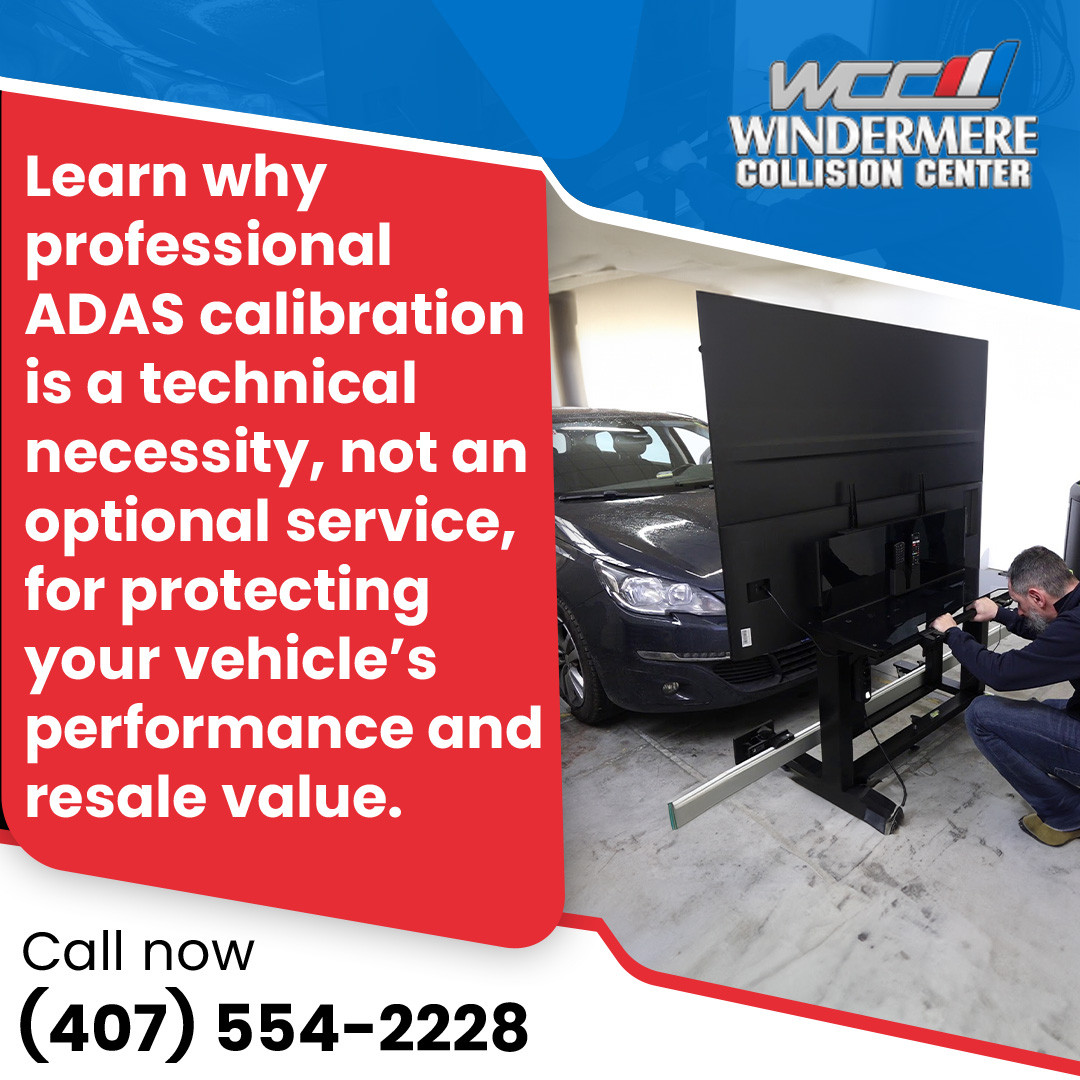
Static calibration positions vehicles on level surfaces in controlled environments with specific targets placed at precise distances and angles. Technicians connect the manufacturer's diagnostic equipment to the vehicle's OBD-II port and run calibration routines that adjust sensor aiming parameters. Target panels feature geometric patterns that cameras and radar systems use as reference points.
Dynamic Calibration Requirements
Dynamic calibration requires test-driving vehicles under specified conditions so sensors can self-calibrate by recognizing real-world features like lane markings, traffic patterns, and road surfaces. Some manufacturers require both static and dynamic calibration in sequence to fully restore sensor functionality.
Calibration Scenario | Average Cost | Repair Duration |
Single windshield camera | $250-$600 | 2-3 hours |
Front radar + camera | $600-$1,000 | 4-6 hours |
Comprehensive multi-sensor | $1,000-$1,400 | 1-2 days |
LiDAR-equipped vehicles | $1,200-$1,600 | 2-3 days |
Manufacturer Certification Standards for Electric Vehicle Repairs
Proper EV body shop in Winter Garden, FL, facilities maintain manufacturer-specific certifications that demonstrate compliance with OEM repair procedures. Tesla certification requires Tesla Toolbox software licenses and proprietary diagnostic hardware, while Rivian facilities need access to Rivian's technical documentation portal.
I-CAR training establishes industry-wide baseline competencies for collision repair technicians, offering specialized courses covering high-voltage safety protocols, aluminum and composite repairs, ADAS calibration procedures, and EV-specific repair techniques.
Certification demonstrates:
Repairs followed manufacturer specifications
Protects vehicle warranty coverage
Reduces insurance company liability concerns
Provides access to OEM parts and technical support
Cost Considerations and Insurance Coverage for EV Sensor Calibration
ADAS calibration can add up to 37% to total repair costs based on industry pricing data. Comprehensive glass coverage typically includes windshield camera calibration, while collision policies cover calibration related to accident repairs.
Certified shops charge premium rates that account for ongoing software subscriptions, equipment maintenance, and continuing education requirements. Non-certified facilities may offer lower prices but cannot access manufacturer diagnostic systems, creating a risk that calibration will fail post-repair verification.
Vehicles with documented calibration records maintain higher resale values because buyers can verify safety system integrity. Dealerships increasingly request calibration documentation during pre-purchase inspections, making proper calibration verification an investment protection strategy.
Essential Questions for Verifying Body Shop Calibration Capabilities
Winter Garden drivers should verify brand-specific certification by requesting documentation showing the current certification status for their EV's manufacturer. Confirm calibration equipment inventory by asking which diagnostic systems the shop owns and whether they maintain active software subscriptions.
Assess technician experience by asking how many similar EVs the shop has repaired in the past year and which specific calibration procedures technicians have performed. Review quality control processes to understand post-calibration test drives, diagnostic scans, and documentation procedures.
Professional facilities specializing in electric vehicle collision repair provide detailed answers about calibration capabilities and welcome technical questions from informed vehicle owners.

Protect Your Electric Vehicle Investment with Certified Calibration Services
Windermere Collision Center maintains certifications from over 20 manufacturers, including Tesla, Rivian, Ford, and GM, with manufacturer-specific diagnostic equipment and calibration systems that restore vehicles to factory specifications. The facility's 40,000 square foot location features dedicated calibration bays with precision target systems and environmental controls required for accurate sensor alignment.
As a certified Tesla repair center and electric vehicle body shop specialist, Windermere Collision Center follows OEM procedures exactly as specified by vehicle manufacturers. Technicians maintain current certifications and participate in ongoing education programs to stay updated on evolving EV sensor calibration requirements.
Windermere Collision Center serves Winter Park, Windermere, Orlando, and nearby areas in Central Florida with manufacturer-certified services that maintain warranty coverage and protect vehicle investments. Contact Windermere Collision Center at (407) 554-2228 to discuss EV calibration requirements and schedule a consultation for your electric vehicle repair needs.
Contact Information:
Windermere Collision Center
933 Carter Rd
Winter Garden, FL 34787
United States
Tom Ramsammy
(407) 554-2228
https://windermerecollisioncenter.com/


Original Source: https://windermerecollisioncenter.com/ev-sensor-calibration-after-collision-repair-technology-requirements-winter-garden-drivers-should-know/