
Shly Deck & Fence: The Different Types of Agricultural Fences and Which One Is Right for Your Property
Carnegie, United States - May 29, 2025 / Shly Deck & Fence /
Shly Deck & Fence: The Different Types of Agricultural Fences and Which One Is Right for Your Property

PITTSBURGH, PA — Choosing the right fence for farmland, livestock, and crops is essential but can be overwhelming. Shly Deck & Fence, trusted agricultural fence contractors, simplify the process by explaining the differences between fence types. They help clients select the best solutions for their land and livestock, offering expert insights on popular fencing systems, their benefits, and key considerations to ensure a smart, lasting investment for property owners.
Top 5 Types of Agricultural Fencing for Your Property
Choosing the right agricultural fence is crucial for safeguarding livestock and property. Here’s a summary of the top five fence types to help you make an informed decision:
Barbed Wire Fencing: Barbed wire is a cost-effective choice for large livestock, featuring sharp barbs spaced along wire strands.
Best for: Cattle ranches, large pastures
Pros: Affordable, easy to install, effective deterrent.
Cons: Not suitable for horses, requires maintenance.
Woven Wire Fencing: Woven wire creates a grid pattern, often reinforced with a frame, ideal for smaller animals.
Best for: Sheep, goats, pigs, gardens
Pros: Strong, prevents escapes, deters predators.
Cons: Higher installation cost, may need reinforcement.
Electric Fencing: Electric fences deliver a mild shock to deter animals from crossing.
Best for: Temporary enclosures, rotational grazing
Pros: Easy to move, cost-effective, works for various livestock.
Cons: Requires power, not suitable for dry or rocky land.
High-Tensile Wire Fencing: This fencing uses smooth, high-tension wire, known for its durability and strength.
Best for: Cattle, horses, long-term installations
Pros: Weather-resistant, low maintenance, can be electrified.
Cons: Complex installation, professional setup recommended.
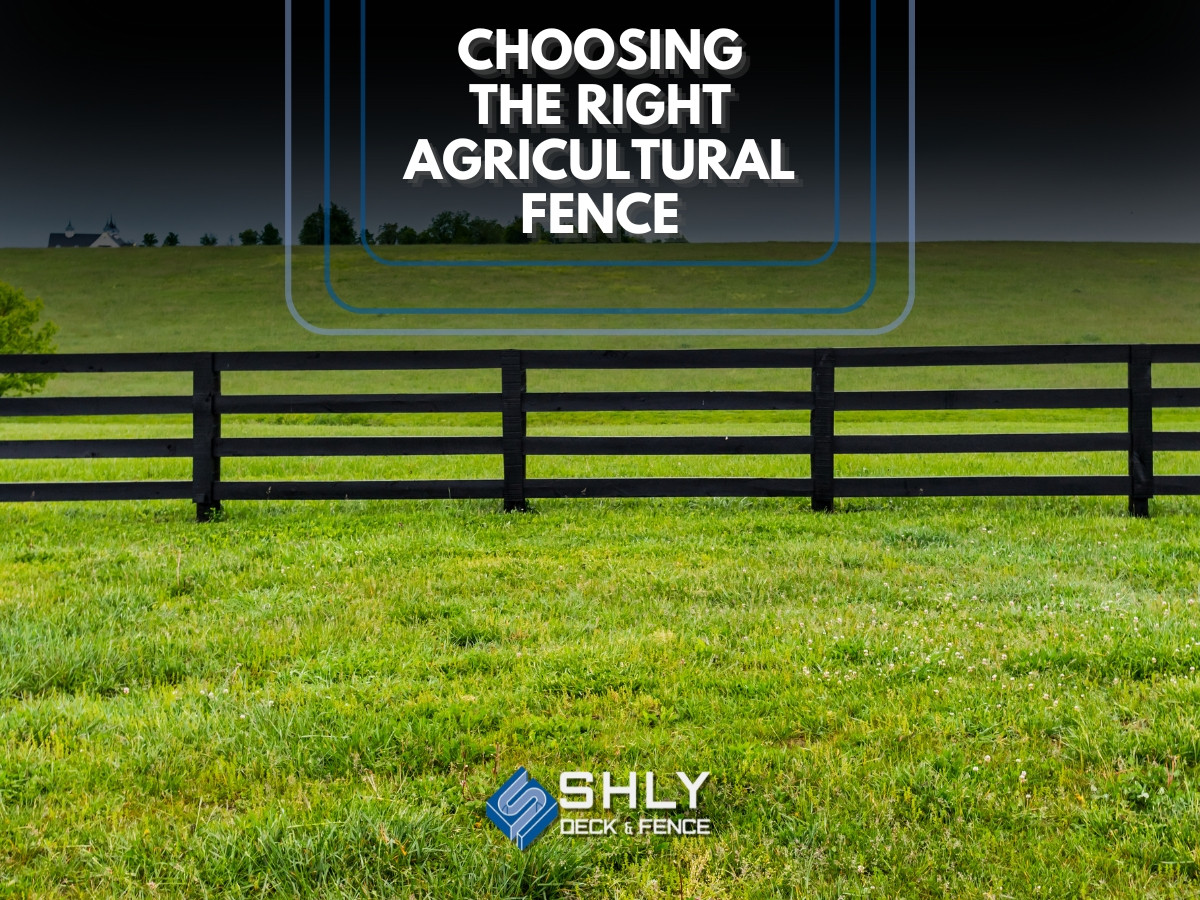
Rail Fencing: Made from wood or vinyl, rail fencing is both functional and visually appealing.
Best for: Horse paddocks, property borders
Pros: Clear boundaries, safe for horses, adds property value.
Cons: Higher cost, requires regular upkeep, especially wood.
These five options provide a range of benefits for different livestock and terrain needs, helping you choose the best solution for your agricultural property.
Agricultural Fence Installation Process Explained for Optimal Farm Security
As experienced agricultural fence contractors, Shly Deck & Fence starts every project with a thorough property evaluation. From measuring boundaries to assessing soil types and livestock behavior, every step is tailored to ensure optimal performance.
The typical process includes:
Site inspection and consultation
Fence planning to meet zoning and livestock needs
Material selection based on terrain, animal type, and budget
Professional installation with quality craftsmanship
Post-installation checks for security and compliance
Whether clients need a permanent solution or a flexible, temporary enclosure, the team brings both expertise and customer-focused service to every job.
Benefits of Choosing the Right Agricultural Fence System
Choosing the appropriate fencing can result in:
Improved animal safety and containment
Reduced loss from predators and escape
Protection of crops and grazing zones
Simplified land management
Increased property value and aesthetics
Clients also benefit from long-term cost savings by avoiding frequent repairs or replacements associated with ill-suited fencing choices. Working with experienced agricultural fence contractors ensures that the right materials and design are chosen for optimal efficiency and durability.
Important Factors to Consider Before Installing an Agricultural Fence
Before selecting a system, Shly Deck & Fence encourages property owners to consider the following:
Livestock Type: Different animals require different fencing for safety and control.
Land Size and Terrain: Hills, valleys, and rocky soil impact fence placement and material choice.
Local Regulations: Some areas have specific zoning laws or fencing requirements.
Budget and Maintenance: High-end materials may have higher upfront costs but lower lifetime maintenance.
Long-Term Goals: Think ahead—expansion or new livestock may call for more versatile options.
Shly Deck & Fence offers consultations to help clients weigh all these variables and arrive at the best, most cost-effective solution.
Common Mistakes & Myths About Agricultural Fencing
Many landowners make avoidable errors or believe common myths about agricultural fencing—leading to safety issues and unnecessary expenses.
Myth: One fence type fits all.
Fact: Each animal and property setup needs a custom solution. Using the wrong fence type can lead to escapes, injuries, or premature wear.Mistake: Choosing the cheapest material.
While affordability matters, the cheapest option often costs more over time due to frequent repairs and replacements.Myth: Electric fences are dangerous.
Modern electric fences are safe, delivering a controlled and humane shock designed only to deter, not harm.
Understanding these common mistakes and myths helps property owners make smarter, safer choices when working with agricultural fence contractors.
Frequently Asked Questions
How long does agricultural fencing typically last?
With proper materials and maintenance, many fences can last 15–25 years or more, especially when installed by a professional agricultural fence contractor.
Can electric fencing be used with all animals?
While effective for most, animals like sheep may require specialized systems due to wool insulation. Consulting an experienced agricultural fence contractor ensures the right setup for each animal type.
Is a permit required to install a fence on private land?
In some areas, a permit is required to install a fence. An agricultural fence contractor, such as Shly Deck & Fence, can assist with understanding local codes and securing the necessary permits.
What are the benefits of hiring an agricultural fence contractor?
Hiring an agricultural fence contractor ensures expert guidance in choosing appropriate materials, complying with local regulations, and achieving a safe, effective installation tailored to the needs of the property and livestock.
Invest in Protection That Lasts
Choosing the right agricultural fence is about more than just marking boundaries—it’s about ensuring the safety, productivity, and longevity of your property and livestock. With years of experience as reliable agricultural fence contractors, Shly Deck & Fence has helped countless property owners find the perfect balance of function, safety, and aesthetics.
For personalized recommendations or to schedule a consultation, contact Shly Deck & Fence today at (412) 515-6575.

Contact Information:
Shly Deck & Fence
100 Bell Ave
Carnegie, PA 15106
United States
Pavel Shlyahovsky
(412) 790-9205
https://shlydeckcompany.com


Original Source: https://shlydeckcompany.com/