
: Signs Your Oil Change Is Overdue: What Your Auto Repair Shop in Albuquerque Wants You to Know
Albuquerque, United States - March 20, 2026 / Mango Automotive /
Albuquerque, NM - Delayed oil changes reduce the oil’s ability to lubricate and protect engine components. As oil ages, it collects dirt, metal particles, and combustion residue that thicken its consistency and restrict circulation. Reduced lubrication increases friction, raises engine temperatures, and accelerates wear on bearings, piston rings, and valve train components, leading to performance loss and costly mechanical repairs.

At Mango Automotive (Downtown), technicians see these effects more often due to Albuquerque’s extreme heat, desert dust, and stop-and-go traffic, all of which shorten oil life. The Downtown Albuquerque auto shop commonly addresses sludge buildup, restricted oil passages, and reduced engine efficiency caused by extended oil change intervals under local driving conditions.
The Role of Engine Oil in Vehicle Health
Engine oil lubricates internal components, reduces friction, and prevents metal-on-metal contact. Fresh oil flows freely through the engine, protecting pistons, bearings, and camshaft components. Over time, oil collects dirt, metal particles, and combustion residue, which thickens the oil and restricts circulation.
As oil degrades, its ability to protect engine components declines. Increased friction leads to higher operating temperatures and accelerated wear. Without prompt oil changes, internal parts experience unnecessary stress that can shorten engine life.
Effects of Delayed Oil Changes
Engine Damage
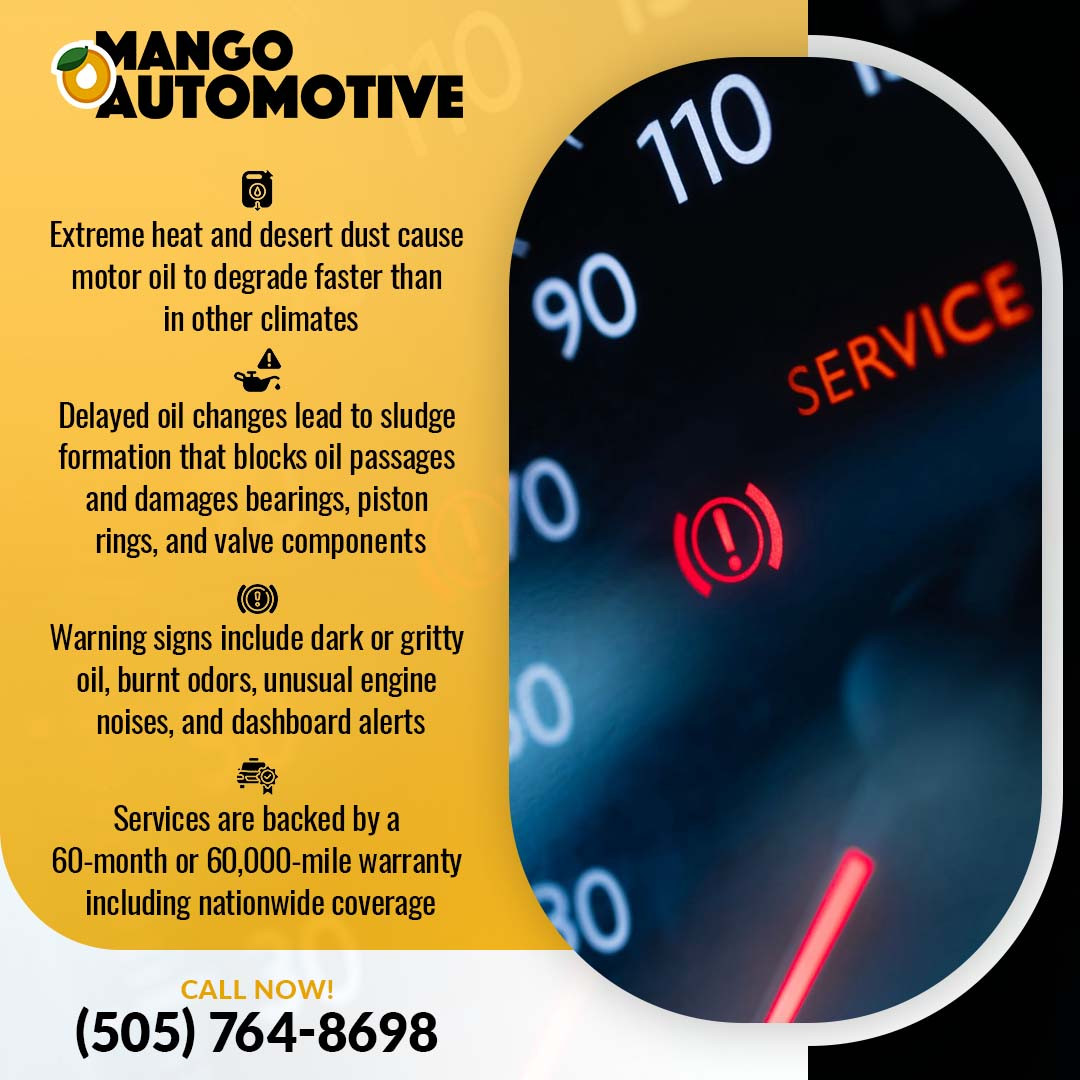
Delayed oil changes commonly lead to sludge formation inside the engine. This thick buildup blocks oil passages and prevents proper lubrication. Bearings, piston rings, and valve train components are especially vulnerable when oil flow is restricted.
Piston rings rely on lubrication to maintain a proper seal inside the combustion chamber. When oil breaks down, rings wear prematurely, allowing oil to burn during combustion and reducing engine power. Upper engine components such as camshafts and valves also suffer when oil cannot reach them consistently, leading to performance issues and long-term mechanical damage.
Performance Decline Linked to Oil Degradation
As oil ages, drivers often notice reduced acceleration, sluggish throttle response, and declining fuel efficiency. Increased internal friction forces the engine to work harder, converting energy into heat instead of usable power. Vehicles may feel less responsive during highway merging or hill climbs.
Idle instability and vibration can also develop when worn oil no longer cushions moving components. These symptoms often worsen gradually, making them easy to overlook until more serious problems appear.
Visual and Sensory Warning Signs
Oil condition gives clear indicators of when service is overdue. Fresh oil appears amber and translucent. Dark, opaque oil signals heavy contamination and loss of protective properties. Thick or gritty oil texture suggests chemical breakdown and reduced lubrication ability.
Odor also reveals the oil condition. A burnt smell indicates excessive heat exposure, while a gasoline odor points to fuel dilution caused by worn components or injector issues. Both conditions accelerate engine wear and require attention from an auto repair shop.
Dashboard Alerts and Engine Noise Indicators
Modern vehicles use sensors to monitor oil pressure and oil life. Oil pressure warning lights demand immediate action, as low pressure can cause rapid engine damage. Maintenance reminder systems also account for driving habits such as short trips and stop-and-go traffic.
Unusual engine noises often accompany oil-related issues. Ticking sounds from the valve train suggest restricted oil flow to upper components. Deep knocking noises signal severe lubrication failure inside the engine and require immediate inspection to prevent complete engine failure.
Albuquerque Driving Conditions That Shorten Oil Life
Extreme heat accelerates oil breakdown, while desert dust contaminates oil more quickly than in humid environments. Downtown traffic patterns increase engine load and operating temperatures, further stressing oil. Short trips prevent engines from reaching temperatures needed to evaporate moisture, allowing contaminants to remain suspended in the oil. Mango Automotive considers these factors when recommending oil change intervals, helping drivers maintain engine reliability year-round.
Professional Oil Change Services in Downtown Albuquerque
Certified technicians at Mango Automotive perform oil change services with close attention to oil condition and internal engine wear. The shop provides auto repair in Downtown Albuquerque focused on correcting engine damage caused by delayed oil changes, including sludge buildup, restricted oil circulation, and wear to internal components. Repair and maintenance services are backed by a 60-month or 60,000-mile warranty, which includes 36 months or 36,000 miles of nationwide coverage and an additional 24 months or 24,000 miles of coverage at Mango Automotive locations.

Schedule Oil Service With Mango Automotive Downtown
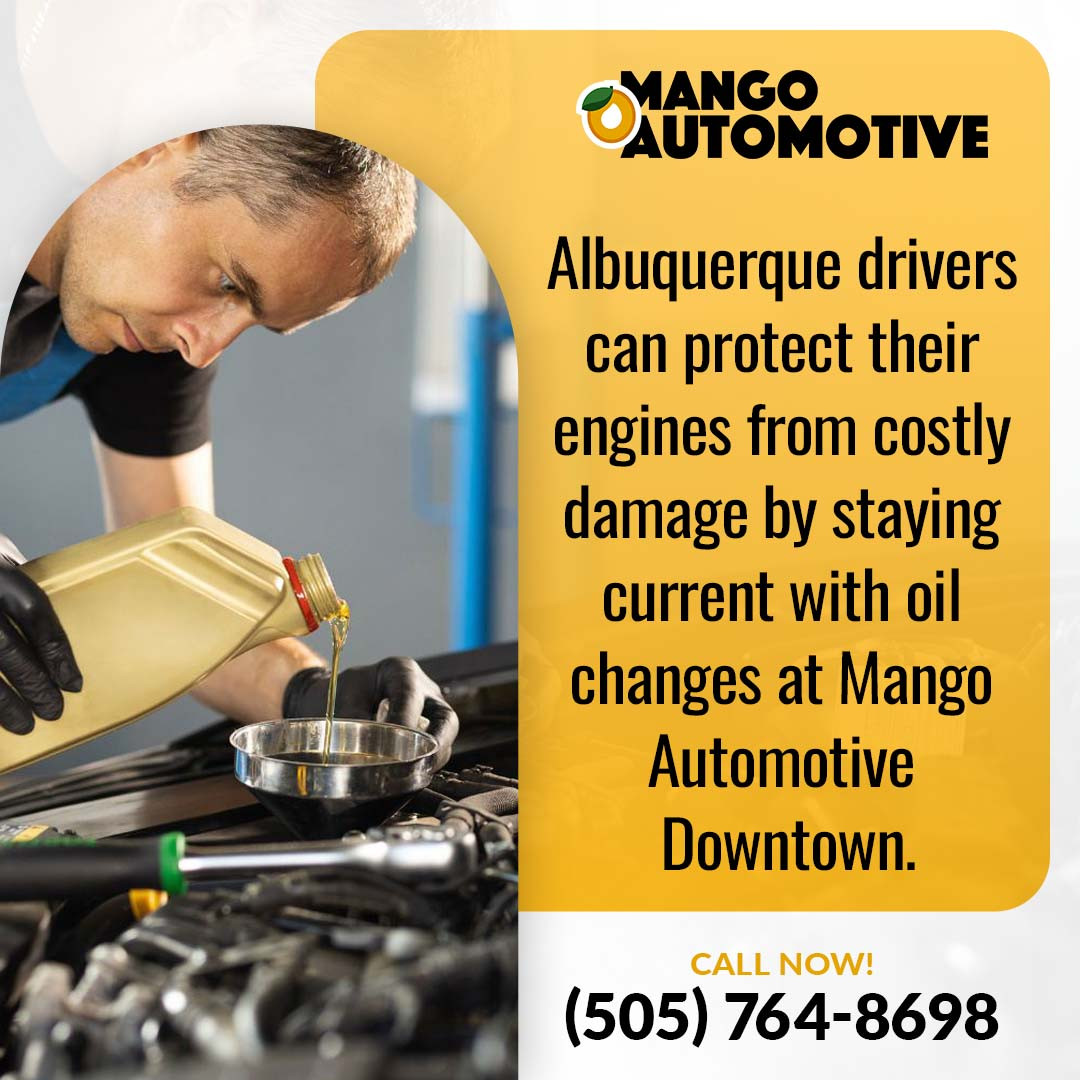
Addressing oil maintenance early helps reduce the risk of engine damage caused by delayed service. Mango Automotive Downtown provides oil change services handled by experienced technicians. Call (505) 764-8698 to schedule service with the car repair shop near you, focused on reliable vehicle repairs and routine maintenance.

Contact Information:
Mango Automotive
700 Central Ave SW
Albuquerque, NM 87102
United States
Jesse Jackson
(505) 764-8698
https://mangoautomotive.com


Original Source: https://www.mangoautomotive.com/signs-your-oil-change-is-overdue-what-your-auto-repair-shop-in-albuquerque-wants-you-to-know