
Cold Temperature Effects on Batteries: Guide from Auto Mechanics in Albuquerque
Albuquerque, United States - January 26, 2026 / Mango Automotive /
Albuquerque, NM - Cold winter mornings create harsh conditions for vehicle electrical systems across Albuquerque. Mango Automotive, the trusted auto mechanics in Albuquerque, sees a sharp rise in battery and charging system issues as overnight temperatures drop. Many drivers notice slow cranking or unexpected no‑start situations once the season shifts. Winter exposes weak components that appeared functional during warmer months. Local motorists often experience breakdowns during the first hard freeze because battery output drops as temperatures decline while engine starting demands rise.

Battery and Charging System Strain During Cold Weather
How Cold Conditions Reduce Battery Strength
A vehicle battery relies on internal chemical reactions to produce electrical current. Low temperatures slow these reactions and reduce available power. At 32 degrees Fahrenheit, a common automotive battery can lose around 35% of its capacity. At zero degrees, available power falls even further.
Lead acid, AGM, and lithium-based systems all experience performance loss from cold weather. Reduced voltage output limits cranking ability at the same time engine oil thickens, increasing resistance inside the engine. This combination creates a high risk of starting failure on winter mornings.
Batteries that perform without issue in mild weather may drop below usable capacity once temperatures fall into the teens. This seasonal decline explains why battery failures increase sharply each winter across New Mexico.
Age also plays a major role. Batteries older than three years are far more vulnerable during cold weather because internal deterioration reduces stability. Corrosion on terminals and loose mounting hardware creates added resistance and further limits delivered power.
Charging System Demands Rise in Low Temperatures
The alternator restores battery charge while supporting electrical accessories. Cold conditions force the alternator to work harder because a cold battery accepts charge at a slower rate. Vehicles that take frequent short trips experience even more difficulty because the battery never reaches a full charge. This pattern leads to gradual depletion and unexpected no‑start situations. Auto mechanics in Albuquerque often see vehicles that start normally at midday but struggle during the first start of the morning.
Voltage regulators inside the charging system also face challenges. These components control the output produced by the alternator. When cold weather affects regulator performance, the system may deliver either low voltage or excessive voltage, both of which create long-term electrical problems. Drivers may notice dim headlights, flickering interior lights, or dashboard warning indicators when the charging system output drops.
Benefits of Professional Testing and Maintenance
Cold cranking amp testing measures available starting power under low temperature conditions. Load testing reveals hidden weaknesses that visual inspection cannot detect. These procedures help identify batteries that should be replaced before temperatures fall further. Alternator output testing verifies charging strength, while voltage drop testing identifies resistance issues along cables and terminals.
Regular maintenance contributes to longer battery and charging system life. Cleaning corrosion from terminals restores proper current flow. Securing the battery prevents vibration damage. Checking electrolyte levels in serviceable batteries prevents plate exposure. These basic steps reduce the chance of sudden failure during cold weather.
Electrical Services for Albuquerque Drivers
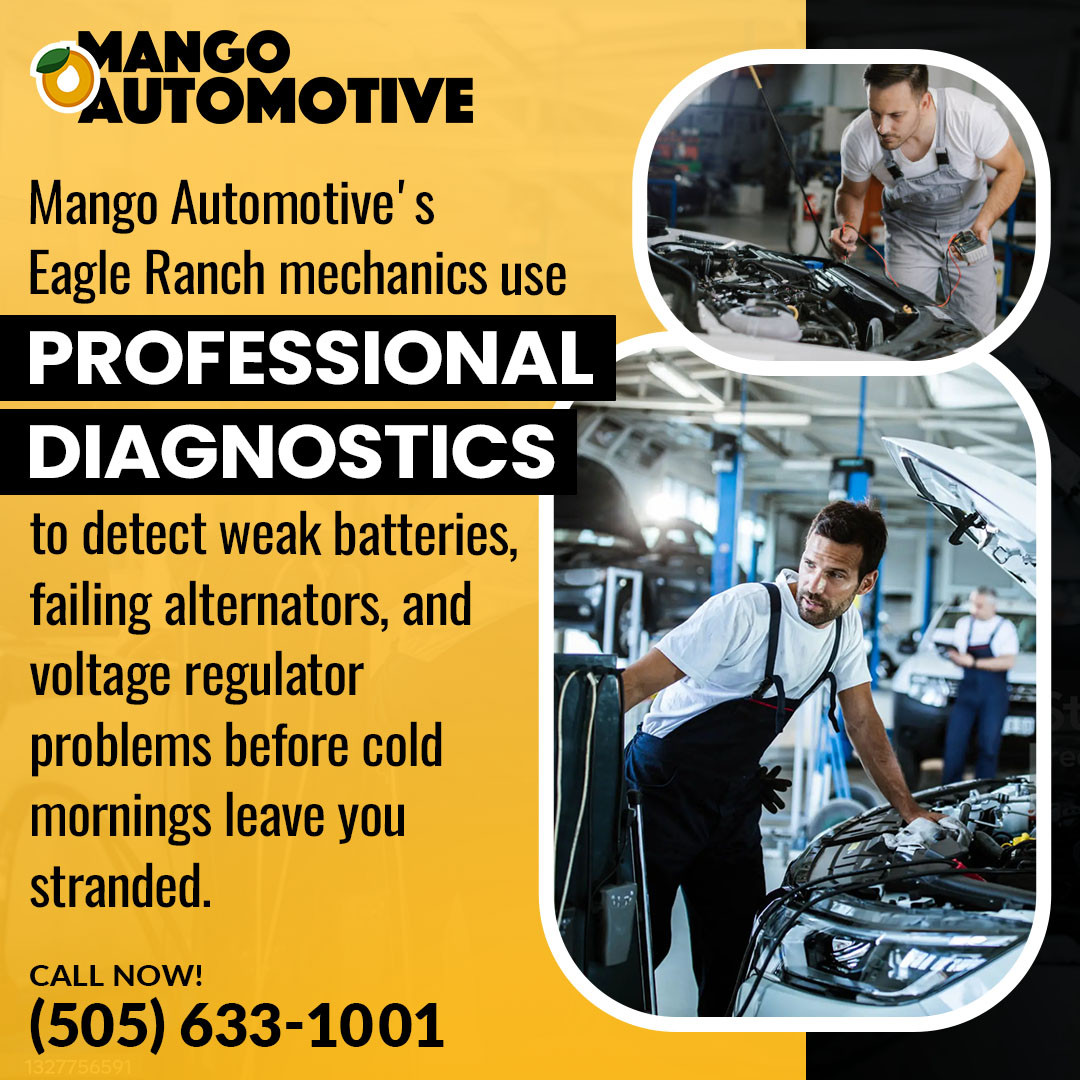
At Mango Automotive, technicians review battery capacity, alternator output, starter performance, and all related electrical connections using professional diagnostic equipment. Testing allows early detection of weak components that could lead to breakdowns.
Their mechanics in Eagle Ranch support all major vehicle makes and models and provide replacements that follow manufacturer specifications. Battery installation includes proper disposal and verification of mounting security. Charging system repairs receive a full diagnostic review before returning the vehicle to the driver. Consistent communication throughout the process helps motorists understand findings, repair needs, and maintenance timelines.
Preparing for Cold Weather and Avoiding Breakdowns
Monitoring local weather reports helps drivers stay ahead of severe temperature drops. Testing the battery when overnight lows fall below freezing often reveals problems early. Parking in covered or enclosed areas protects the battery from extreme temperature exposure.
Reducing electrical accessory use before starting allows more current to support the starter motor. Once the engine is running and the alternator begins to charge, accessories can be used safely.
Winter failures are largely preventable with timely service. Addressing electrical concerns before temperatures fall protects the vehicle and reduces the chance of roadside emergencies. Drivers who experience slow cranking, warning lights, or repeated jump starts should schedule diagnostic service promptly.
Schedule Winter Battery and Charging System Service

As colder temperatures arrive, having a mechanic near you inspect your battery and charging system can prevent unexpected failures. Mango Automotive offers expert electrical diagnostics for drivers across Albuquerque. For battery testing, alternator diagnosis, or electrical repairs, contact Mango Automotive at (505) 633-1001 for service in the Eagle Ranch area.


Contact Information:
Mango Automotive
9620 Eagle Ranch Rd NW
Albuquerque, NM 87114
United States
Jesse Jackson
(505) 633-1001
https://mangoautomotive.com/


Original Source: https://www.mangoautomotive.com/cold-temperature-effects-on-batteries-guide-from-auto-mechanics-in-albuquerque