Two consecutive hurricane seasons have divided Sarasota’s waterfront real estate market, with newer, hurricane-resistant homes commanding significant price advantages while older properties linger on the market and face rising costs.
Sarasota’s luxury waterfront market is undergoing a measurable shift driven by recent storm performance. According to Laura Pearson, real estate advisor at Premier Sotheby’s International Realty, the difference in how properties fared during the storms has created a clear split: buyers now prioritize structural resilience and are willing to pay more for homes that meet modern standards.
“Newer structures withstood the storm very well,” Pearson says. “Older condominiums, older houses from mid-century or before the ’90s, they had some issues.” This difference is influencing not just prices, but transaction timelines, insurance costs, and which properties buyers will even consider.
The Storm Performance Gap
The last two hurricane seasons served as a real-world test for Sarasota’s coastal housing. Homes built with elevated foundations and modern wind standards remained largely undamaged, while many older structures—including mid-century cottages—suffered significant damage. This distinction triggered a series of financial consequences for owners of older homes.
“Afterwards, there were insurance questions, there were assessments for condos,” Pearson explains. The immediate repair costs were only part of the problem. Buyers faced uncertainty about future expenses, as condo associations had not yet finalized assessment amounts and insurance companies were still recalculating risk and premiums.
This uncertainty led to what Pearson calls “a year of readjusting,” during which the market slowed while owners, associations, and insurers determined the financial impact of storm damage. “There was a delay in understanding what your costs might be as they go through repairs,” she notes. Only after assessments were finalized and insurance rates reset did buyers and sellers regain clarity about the actual carrying costs of older coastal properties.
Elevation played a critical role in storm survival. Pearson notes that homes “raised up higher with smart elevation, they took on the storms very well.” She also points to the importance of canal design: properties on flow-through canals, where water could move out rather than accumulate, fared better than those at dead-end canals, which saw more flooding as storm surge had nowhere to go.
The New Construction Premium
The market response has been clear: buyers are paying significant premiums for new construction. When asked if buyers are willing to pay more for newly built properties versus renovated older ones, Pearson is unequivocal: “Yes.”
This premium is driven by more than just storm resilience. Developers are also using financial incentives to make new homes more attractive. “They can buy into an interest rate in their mortgage so they can offer that as a premium to their customer base,” Pearson says. By offering rate buy-downs, developers can present buyers with lower monthly payments, making the higher upfront price of new construction easier to justify.
However, Pearson warns of a possible overcorrection. “I think they’re overbuilding,” she observes, pointing out that the rush to new development often comes at the expense of established landscaping and neighborhood character. “When you’re doing the new development, there’s often just the few palm trees that they plant, they’ve knocked everything down.”
This trade-off matters to some buyers. While new construction offers better storm protection and updated features, it often means smaller lots, minimal landscaping, and a loss of the mature tree canopies and outdoor spaces found in established communities. Pearson suggests that buyers who value community character may find greater long-term value in renovating older homes, even after factoring in storm resilience and potential assessments.
Changing the Face of Barrier Island Communities
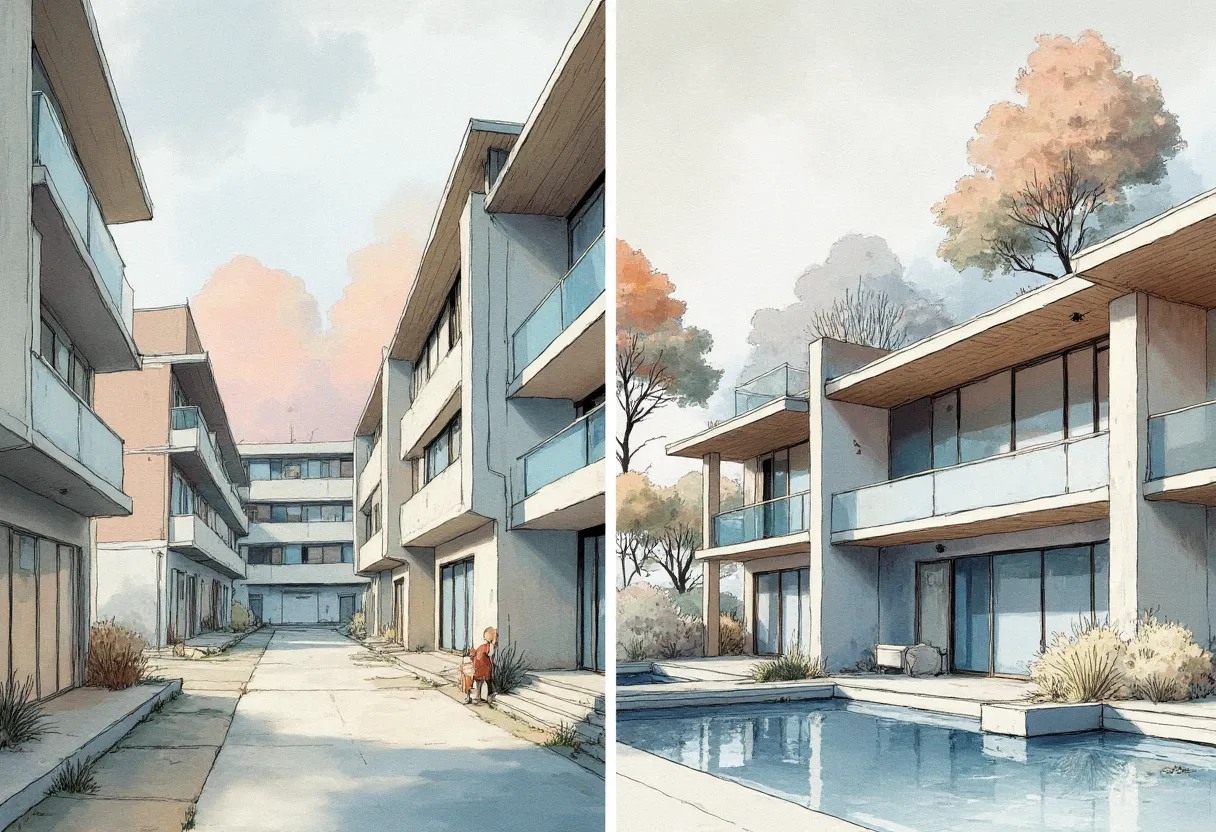
This shift is altering the long-term landscape of Sarasota’s barrier islands. As older homes are demolished and replaced with new construction built to current codes, the character of these communities is changing.
“Newer homes are going to go up that are constructed to standards that are much higher, and they will be able to take a storm,” Pearson says. But she adds, “It changes the face of it, because there’s less variety of style, price point.” The new homes are safer and more resilient, “but there will also be much higher price point, more exclusive homes.”
This trend amounts to a climate-driven form of gentrification. Building codes and insurance costs are pushing out the architectural diversity and range of price points that once defined places like Longboat Key. The market is favoring higher-end development, as only those price points can support the costs of modern resilience standards while remaining profitable for builders.
Market Stabilization After Uncertainty
The market is now moving past the uncertainty that followed the storms. “Now they’ve declared their assessments for condominiums, so they know the cost,” Pearson explains. With final numbers in hand, buyers and sellers can make informed decisions, rather than guessing at future liabilities.
Pearson describes the current market as “almost at the beginning again of healthier structure and better market.” The correction over the past year was less about price discovery and more about information discovery. Once the actual costs associated with older construction became clear, the market could function normally again, but with a new understanding of what different property types are worth in a climate-exposed setting.
Whether this stabilization leads other coastal markets to adopt similar resilience-focused criteria remains to be seen. In Sarasota, however, the lesson is clear: storm performance is an immediate, documented factor in determining which properties fetch premiums and which sit unsold.
Buyers are no longer treating hurricane risk as a theoretical concern. Instead, past storm performance, elevation, and construction quality are now central to purchasing decisions—reshaping not just prices, but the very character of Sarasota’s waterfront communities.