New York, NY, Jan. 23, 2026 (GLOBE NEWSWIRE) -- Disclaimer: This article is for informational purposes only and does not constitute medical or dermatological advice. Synevra UltraLift is a cosmetic skincare serum, and VitaLock Complex is a dietary supplement—these are fundamentally different product categories from prescription dermatological treatments. A commission may be earned if you purchase through links in this article.
Search Term Context: "Synevra" and "Synevra UltraLift" are used in this report to reflect common consumer search behavior and product naming. This analysis does not rank products, endorse outcomes, or predict results. It summarizes publicly available company disclosures and ingredient-level research for informational purposes only.
January represents a period when consumer interest in skincare and beauty products often increases, with searches referencing anti-aging terminology, peptide complexes, and appearance-supporting ingredients. This report examines Synevra UltraLift & VitaLock Complex as one example within the dual-action skincare category, focusing on ingredient disclosures, regulatory context, and research framing.
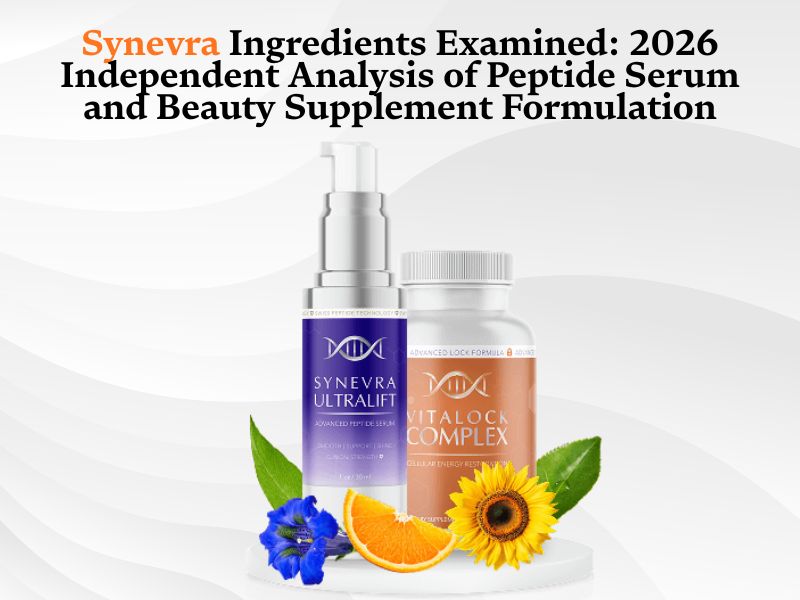
Why This Analysis Now: As consumers enter 2026 with renewed focus on skincare routines and beauty goals, topical-plus-nutritional skincare systems continue to generate significant search interest. Early-year skincare interest often increases as consumers reassess routines and search for peptide serums and beauty supplements in the anti-aging skincare category. This analysis provides ingredient-level transparency to help consumers evaluate products within this growing category.
View the current Synevra offer (official Synevra page)
What "Dual-Action Skincare" and "Peptide Complex" Mean in Cosmetic Marketing
Consumers researching anti-aging skincare have likely noticed a growing category of products that combine what goes on the skin with what's taken internally. Synevra's Lift & Lock System falls into this dual-action approach. Understanding what that actually means—and how to think about it—provides important context for evaluation.
Topical cosmetics versus prescription treatments: Here's the foundational distinction that matters. Cosmetic products like Synevra UltraLift serum are formulated to affect the appearance of skin. They're not FDA-approved to treat skin conditions. That's a fundamentally different category from prescription dermatological treatments—things like retinoids prescribed for acne or photodamage—which undergo clinical trial processes and regulatory review for specific medical indications.
Dietary supplements versus medications: The VitaLock Complex component is a dietary supplement containing vitamins and botanical extracts. Under the Dietary Supplement Health and Education Act (DSHEA), supplements don't undergo pre-market approval for efficacy. When terms like "beauty support," "skin health," and "radiance" appear in supplement marketing, that's conceptual positioning based on ingredient research—not FDA approval for treating any skin condition.
Peptide terminology context: Peptides are short chains of amino acids that researchers have studied for their potential effects on skin appearance. When "peptide complex" appears in cosmetic marketing, it indicates the presence of peptide ingredients—but not pharmaceutical-grade compounds or FDA-approved anti-aging treatments.
Why this matters for consumer evaluation: Products like Synevra contain peptides, vitamins, botanical extracts, and other compounds that researchers have studied in dermatological contexts. But these represent a fundamentally different category—with different mechanisms, regulatory frameworks, and evidence standards—than prescription dermatological treatments. Keeping this distinction clear helps set appropriate expectations.
Synevra UltraLift Serum Ingredient Disclosure Review
According to the official Synevra website at the time of publication, the Synevra UltraLift serum contains several primary ingredients. The following examines what each one is, what research has explored, and what context consumers need to evaluate the formulation.
Dipeptide Complex (SYN-AKE®)
What it is: SYN-AKE is a trademarked synthetic tripeptide developed by Pentapharm. It was designed to mimic a peptide found in Temple Viper venom and has been used in cosmetic formulations as a subject of dermatological research examining its effects on skin appearance.
What research has explored: Published studies and manufacturer-sponsored research have examined SYN-AKE in the context of expression line appearance. Research published by the ingredient manufacturer examined the peptide's effects on muscle contraction-related mechanisms in laboratory settings. Studies have explored its relationship with the appearance of fine lines associated with facial expressions.
Note: The research discussions throughout this analysis summarize general ingredient-literature context and do not imply that Synevra's finished products have been clinically studied as complete formulations.
According to the ingredient manufacturer's published data, SYN-AKE has been examined for its potential effects on the visible appearance of expression-related wrinkles in human subjects using the peptide at various concentrations.
According to the company: Synevra describes the Dipeptide Complex as a "synthetic peptide that helps smooth the appearance of expression lines." This description reflects marketing positioning based on ingredient research.
Consumer context: These are ingredient-level findings, not clinical results for the finished Synevra product. Ingredient studies examine isolated compounds under controlled conditions—and those results don't automatically translate to what any specific finished product will do. Worth noting: the concentration of SYN-AKE in the Synevra formula isn't disclosed on the company's website, which is relevant when comparing formulation potency across products.
Sodium Hyaluronate
What it is: Sodium hyaluronate is the sodium salt of hyaluronic acid—a naturally occurring substance in human skin that helps maintain moisture. It's one of the most widely used cosmetic ingredients for its humectant properties, meaning it attracts and holds water.
What research has explored: Hyaluronic acid and its derivatives have been extensively studied in dermatological literature. Published, peer-reviewed research has examined hyaluronic acid's role in skin hydration and its relationship to skin appearance characteristics. Research has explored how topical hyaluronic acid application affects transepidermal water loss and the visible appearance of skin texture.
According to the company: Synevra describes Sodium Hyaluronate as an ingredient that "helps skin appear plump and hydrated."
Consumer context: Hyaluronic acid is well-established in cosmetic science. The key variables that affect how well it works include molecular weight (smaller molecules penetrate better; larger molecules sit on the surface and create a film) and concentration. The Synevra website doesn't specify which molecular weight they use, which is worth knowing for consumers prioritizing this ingredient in their research.
Ascorbic Acid (Vitamin C)
What it is: Ascorbic acid is the pure form of Vitamin C—an antioxidant that's been studied extensively in dermatological research for its role in collagen synthesis support and skin brightening.
What research has explored: Published, peer-reviewed research has examined topical vitamin C in the context of photoprotection, collagen synthesis support, and melanin production regulation. Research has explored its effects on the appearance of hyperpigmentation and skin tone evenness.
According to the company: Synevra describes Ascorbic Acid as an ingredient that "brightens and helps even skin tone appearance."
Consumer context: Vitamin C is one of the most researched cosmetic ingredients. The practical challenge is stability—ascorbic acid oxidizes easily when exposed to light and air. Formulation factors including pH, concentration, and delivery systems significantly affect whether topical vitamin C actually delivers on its research potential. The company doesn't disclose concentration or stability mechanisms.
Tocopheryl Acetate (Vitamin E)
What it is: Tocopheryl acetate is a stable form of Vitamin E commonly used in cosmetic formulations. It functions as an antioxidant and has been studied for its skin-conditioning properties.
What research has explored: Published, peer-reviewed research has examined vitamin E's antioxidant properties and its relationship to oxidative stress in skin. Research has explored topical vitamin E in the context of photoprotection and skin barrier function.
According to the company: Synevra describes Tocopheryl Acetate as an "antioxidant that helps protect skin."
Consumer context: Vitamin E is well-established as a cosmetic antioxidant, often paired with Vitamin C because research suggests they may work synergistically. The inclusion here follows a common formulation logic.
Glycerin
What it is: Glycerin is a humectant widely used in cosmetic formulations to attract and retain moisture. It's one of the most commonly used skincare ingredients globally—found in everything from drugstore moisturizers to luxury serums.
What research has explored: Extensive dermatological literature has examined glycerin's humectant properties and its effects on skin hydration. Research has demonstrated glycerin's ability to support skin barrier function and moisture retention.
According to the company: Synevra describes Glycerin as an ingredient that "helps maintain skin moisture."
Consumer context: Glycerin is a workhorse ingredient with extensive safety and efficacy data. Its inclusion here is standard for hydration-focused formulations.
Synevra VitaLock Complex Ingredient Disclosure Review
The VitaLock Complex represents the nutritional component of the Synevra system—the "inside" part of the inside-out approach. As a dietary supplement, VitaLock Complex is regulated under DSHEA and isn't FDA-approved to treat any condition. The following examines each ingredient and the relevant research context.
Biotin
What it is: Biotin, also known as Vitamin B7, is a water-soluble B vitamin that plays a role in various metabolic processes. It's become a staple in beauty supplements due to its association with hair, skin, and nail health.
What research has explored: Published research has examined biotin's role in keratin production and its relationship to hair and nail health—particularly in cases of biotin deficiency. Peer-reviewed studies have examined biotin supplementation in various populations.
According to the company: Synevra describes Biotin as supporting "healthy-looking hair, skin, and nails."
Consumer context: Here's the nuance that matters: research suggests biotin benefits are most pronounced in individuals who are actually biotin-deficient. Evidence for benefits in people who already have adequate biotin levels is less established. Most people eating a varied diet aren't biotin-deficient—which doesn't mean supplementation is useless, but it does mean results may vary significantly based on individual nutritional status.
Niacinamide
What it is: Niacinamide, also known as nicotinamide or Vitamin B3, is a water-soluble vitamin with extensive research supporting its use in skincare applications.
What research has explored: Published, peer-reviewed research has examined niacinamide's effects on skin barrier function, sebum production, and skin tone appearance. Research has explored its relationship to skin radiance and texture.
According to the company: Synevra describes Niacinamide as helping to "support skin's natural radiance."
Consumer context: Niacinamide is one of the most well-researched skincare ingredients—but here's the catch: most of that research examines topical application, not oral supplementation. The VitaLock Complex delivers it orally, which is a different delivery mechanism with different research backing.
Vitamin B6
What it is: Vitamin B6 (pyridoxine) is a water-soluble vitamin involved in numerous metabolic processes, including amino acid metabolism and neurotransmitter synthesis.
What research has explored: Research has examined vitamin B6's role in protein metabolism and its relationship to skin health. Studies have explored B vitamin complexes in the context of overall skin appearance.
According to the company: Synevra describes Vitamin B6 as contributing to "normal skin appearance."
Consumer context: B6 is a supportive inclusion in a beauty supplement formula. It's not typically a headline ingredient, but it plays a role in the broader B-vitamin complex approach to supporting skin health.
Zinc
What it is: Zinc is an essential mineral involved in numerous enzymatic processes, including those related to skin health, wound healing, and immune function.
What research has explored: Published, peer-reviewed research has examined zinc's role in skin health, particularly its relationship to wound healing, sebum regulation, and inflammatory skin conditions.
According to the company: Synevra describes Zinc as helping to "maintain healthy-looking skin."
Consumer context: Zinc research in dermatology has primarily focused on deficiency states and specific skin conditions. As with biotin, baseline zinc status likely affects how much difference supplementation makes for any given individual.
Horsetail Extract
What it is: Horsetail (Equisetum arvense) is a botanical traditionally used in herbal medicine. It's a natural source of silica and has been included in beauty supplements for its purported hair and nail support.
What research has explored: Limited clinical research has examined horsetail extract in the context of hair and nail health. Some studies have explored its silica content and relationship to connective tissue.
According to the company: Synevra describes Horsetail Extract as a "traditional botanical for beauty support."
Consumer context: The scientific evidence base for horsetail extract in beauty applications is more limited compared to other ingredients in this formula. This is a traditional-use inclusion rather than one backed by robust clinical data.
Understanding the "Swiss-Inspired" Positioning: What It Actually Means
Synevra's marketing references Swiss innovation and positions the formula as "inspired by Swiss skincare research traditions." The following unpacks what this actually means—and what it doesn't.
Switzerland's skincare reputation: Switzerland has a longstanding reputation in the luxury skincare and cosmetic industries. Numerous Swiss companies conduct peptide and cosmetic ingredient research, and the country's strict quality standards and pharmaceutical heritage have contributed to this reputation. When brands reference "Swiss" positioning, they're typically associating with this perception of precision and quality.
What "Swiss-Inspired" means in Synevra's context: According to the company's website, Synevra's formula "incorporates ingredients studied by Swiss researchers and used in premium skincare worldwide." This reflects marketing positioning based on ingredient sourcing and research associations.
What it doesn't mean: "Swiss-inspired" formulation does not indicate Swiss manufacturing, Swiss regulatory approval, or clinical studies conducted in Switzerland. The company states that ingredients are "carefully handled according to the USDA National Organic Program" in an FDA-registered facility (per the company's published statements)—indicating US-based production and handling, not Swiss manufacturing.
Consumer evaluation context: The Swiss association provides marketing context for the formula's premium positioning. It shouldn't be interpreted as indicating particular regulatory certifications, clinical validation, or manufacturing origin beyond what the company explicitly states.
View the current Synevra offer (official Synevra page)
Consumer Profile Considerations: Alignment and Alternatives
Based on the disclosed ingredients and formulation approach, the following framework may help consumers evaluate whether this type of system aligns with their research criteria. This is not a recommendation—it's a structure for individual evaluation.
Characteristics That May Align With Certain Consumer Preferences
Interest in dual-action approaches: Consumers researching skincare systems that combine topical application with oral nutritional support—the "inside-out" philosophy—may find Synevra's structure aligns with that approach.
Peptide-curious consumers: Consumers researching peptide-based serums specifically may find the SYN-AKE inclusion relevant, as it represents an ingredient studied in the context of expression line appearance.
Simplicity-seekers: Consumers who prefer to consolidate routines rather than layering multiple serums and separate supplements may find a bundled system approach appeals to their preferences.
Formulation preferences: Consumers who prioritize paraben-free, cruelty-free, and non-GMO formulation characteristics may find it relevant that the company states Synevra meets these criteria.
Considerations That May Point Toward Other Options
Need for medical-grade treatment: Consumers with diagnosed dermatological conditions requiring medical intervention should note that cosmetic products and supplements aren't substitutes for prescription treatments. Working with a dermatologist is advisable.
Concentration transparency priority: Consumers who need to know exact active ingredient concentrations to compare formulations should note that Synevra doesn't disclose these on the website.
Preference for single-ingredient targeting: Consumers who prefer to isolate specific compounds (like using a dedicated Vitamin C serum at a known concentration) may find a bundled multi-ingredient system doesn't match their approach.
Currently using prescription topicals: Consumers on prescription retinoids or other active treatments should note that adding new cosmetic products requires coordination with a dermatologist to avoid interactions or irritation.
Questions That May Inform Consumer Research
Before choosing any skincare system, consumers may find it useful to consider:
- Have persistent skin concerns been discussed with a dermatologist to rule out conditions requiring medical treatment?
- Are there prescription topical treatments currently in use that might interact with new products?
- Are expectations calibrated to what cosmetic products can realistically deliver versus prescription treatments?
- Does a dual-action system fit the intended skincare routine approach?
- Have ingredient disclosures been compared across multiple options?
Understanding Topical-Plus-Nutritional Skincare: The Category Context
A central theme in Synevra's positioning involves combining topical serum application with oral nutritional support. Here's the scientific context behind this approach.
The inside-out philosophy: Some skincare perspectives suggest that skin appearance is influenced by both external topical care and internal nutritional factors. This isn't controversial—nutrition clearly affects skin (think of how dehydration or vitamin deficiencies manifest). The question is whether specific supplements deliver measurable cosmetic benefits beyond what a balanced diet provides.
What research has explored: Published studies have examined the relationship between nutrition and skin health. Peer-reviewed research has explored how nutritional factors may influence skin appearance and aging processes from an internal perspective, while topical application addresses external factors.
Synevra's positioning: According to the company, the Synevra system "works both externally and internally to support your skin's natural beauty and radiance." This reflects the brand's positioning within the dual-action category.
The honest context: This research represents general nutritional science and ingredient-level investigation. Such findings don't constitute evidence that the Synevra system specifically will produce particular skin appearance outcomes. The dual-action philosophy has research support as a concept—but that's different from clinical validation of a specific product system.
Marketing Language Versus Ingredient Research: Reading Between the Lines
Here's something worth understanding when evaluating Synevra or any skincare product: there's a meaningful gap between marketing terminology and what published research actually indicates.
What the marketing says: Synevra references "reducing the appearance of fine lines and wrinkles," "radiant-looking skin," and "comprehensive skincare support." The company positions the system as "Swiss-inspired" and emphasizes premium ingredient quality.
What that represents: These descriptions are brand positioning based on the company's interpretation of ingredient research. They're not clinical findings for the finished product and shouldn't be interpreted as guaranteed outcomes.
The research reality: Studies examining individual ingredients like SYN-AKE, hyaluronic acid, and vitamin C have explored their effects in controlled laboratory and clinical settings. That research examines isolated compounds at specific dosages and concentrations. It doesn't constitute evidence that any specific finished product containing those ingredients will produce particular outcomes in the people who use it.
Consumer evaluation approach: When evaluating Synevra—or any cosmetic product—looking past the aspirational marketing language and focusing on: (1) what ingredients are actually disclosed, (2) what published research exists on those ingredients, (3) what concentrations and formulation details are available, and (4) how realistic expectations are based on the product category—provides a more grounded framework for decision-making.
Safety and Usage Considerations
Before adding any new skincare product to a routine, the following considerations are relevant.
Topical product considerations: As with any new skincare product, the company recommends a patch test before full application. Consumers with known sensitivities to any listed ingredients should review the complete ingredient list. Those using prescription retinoids or other active topical treatments should consult a dermatologist before adding new products—actives can interact, and irritation can compound.
Supplement considerations: VitaLock Complex contains biotin, niacinamide, vitamin B6, zinc, and horsetail extract. Consumers taking medications or managing health conditions should consult healthcare providers before starting any new supplement. One specific note: high-dose biotin supplementation has been reported to interfere with certain laboratory tests—consumers having bloodwork done should mention any biotin supplementation to their healthcare provider.
Pregnancy and nursing: As with any cosmetic product and dietary supplement, healthcare provider consultation is recommended before use during pregnancy or nursing.
According to the company: Synevra states the formula is a "gentle formula suitable for daily use" and recommends a patch test first. Healthcare provider consultation is always advisable before starting any new skincare or supplement regimen.
Company-Reported Usage Information
The following reflects company-reported information and is not medical or dermatological guidance.
According to the official Synevra website, the company recommends applying the UltraLift serum as directed and taking VitaLock supplements with food. Full instructions are included with the product.
According to the company's FAQ, usage consistency is emphasized, and the company notes that individual results vary.
Individual experiences vary significantly based on numerous factors including age, baseline skin condition, skin type, sun exposure history, consistency of use, and other variables.
Company-Reported Availability Information
According to company-published information, the Synevra system is distributed exclusively through its official website and is not sold in stores or through other online retailers.
According to information published on the official Synevra website at the time of review, the company reports offering multiple purchasing configurations that bundle the UltraLift serum with optional VitaLock Complex supplements. The company also discloses that pricing, shipping terms, and refund policies may vary over time and encourages consumers to review the most current details directly on its official website before making a purchase decision.
Refund policy: According to company disclosures, Synevra reports a 60-day refund policy. The company states that customers who are not satisfied can contact customer service for assistance. Consumers should verify current refund terms and any conditions directly on the official website, as policies are subject to change.
Purchase structure: According to the company's FAQ, purchases are described as one-time transactions without automatic subscriptions or recurring charges.
Current availability, policies, and terms can be reviewed on the official Synevra website.
Company and Distribution Information
According to published information on the Synevra website:
Retailer: According to the company's FAQ, charges appear on bank statements under "BuyGoods" for billing descriptor purposes.
Contact: support@synevra.com
Payment security: According to the company, the site uses SSL encryption for transaction security.
Manufacturing and Quality Claims Review
According to the official Synevra website, the company makes several quality-related statements:
Facility registration: The company states that all ingredients are "carefully handled according to the USDA National Organic Program" in an FDA-registered facility (per the company's published statements).
Formulation characteristics: The company describes Synevra products as "Non-GMO, paraben-free, and cruelty-free."
Quality positioning: The company describes ingredients as "premium ingredients carefully selected for quality" and "gentle formula suitable for daily use."
Consumer verification: Consumers seeking additional documentation regarding manufacturing certifications, third-party testing reports, or quality assurance protocols may contact the company directly using the provided contact information.
Consumer Evaluation Summary
Synevra UltraLift & VitaLock Complex represents one product system within the broader dual-action skincare category. Here's what matters for evaluation:
Regulatory Classification: Synevra UltraLift is a cosmetic skincare product, and VitaLock Complex is a dietary supplement. Neither is FDA-approved to treat skin conditions. The terminology used in marketing reflects conceptual positioning, not FDA approval for treating any skin condition.
Ingredient Disclosure: According to the official Synevra website at the time of publication, the UltraLift serum contains Dipeptide Complex (SYN-AKE), Sodium Hyaluronate, Ascorbic Acid (Vitamin C), Tocopheryl Acetate (Vitamin E), and Glycerin. The VitaLock Complex contains Biotin, Niacinamide, Vitamin B6, Zinc, and Horsetail Extract.
Research Context: Published studies have examined these ingredients in various dermatological and nutritional contexts. Ingredient-level research doesn't constitute evidence that Synevra as a finished system will produce particular outcomes. The finished products haven't been independently clinically studied as complete formulations.
Consumer Research Considerations: Compare marketing language against ingredient disclosures. Understand product classifications. Consult healthcare providers or dermatologists for persistent skin concerns. Calibrate expectations to available research rather than marketing positioning. Review current policies and terms on the official website before making decisions.
For persistent skin concerns requiring medical attention, working with a dermatologist is advisable. Prescription dermatological treatments should not be changed or discontinued without medical supervision.
Consumers can view the current Synevra offer (official Synevra page) to review manufacturer-published details including ingredient information, usage instructions, and current policies.
Frequently Asked Questions: Synevra Consumer Information
What category of product is Synevra?
Synevra UltraLift is marketed by the company as a cosmetic skincare serum, and VitaLock Complex is a dietary supplement. As cosmetic and supplement products, they are not FDA-approved to diagnose, treat, cure, or prevent disease.
What ingredients are in Synevra UltraLift serum?
According to the official Synevra website, the UltraLift serum contains Dipeptide Complex (SYN-AKE), Sodium Hyaluronate, Ascorbic Acid (Vitamin C), Tocopheryl Acetate (Vitamin E), and Glycerin.
What ingredients are in VitaLock Complex?
According to the official Synevra website, VitaLock Complex contains Biotin, Niacinamide, Vitamin B6, Zinc, and Horsetail Extract.
How should Synevra be used?
According to company disclosures, the serum should be applied as directed and supplements should be taken with food. Full instructions are included with the product.
Is Synevra suitable for sensitive skin?
According to the company's FAQ, the formula is described as a "gentle formula designed for daily use" and they "recommend a patch test first" as with any new skincare product.
What is the return policy?
According to company disclosures, Synevra reports a 60-day refund policy. Consumers should verify current terms and any conditions directly on the official website before purchasing.
Is this a subscription?
According to the company's FAQ, purchases are described as one-time transactions without automatic subscriptions or recurring charges.
Is payment information secure?
According to the company, the site uses SSL encryption for transaction security.
Is Synevra affiliated with Swiss companies or manufactured in Switzerland?
Synevra describes itself as "Swiss-inspired," referencing ingredients studied by Swiss researchers. This reflects marketing positioning and does not indicate Swiss manufacturing, Swiss company ownership, or Swiss regulatory certification. The product is described as handled in an FDA-registered facility, indicating US-based operations.
Contact Information
For questions about Synevra, according to the company's published information:
Customer Support Email: support@synevra.com
Official Website: View the current Synevra offer (official Synevra page)
Disclaimers
Cosmetic Product Disclaimer: Synevra UltraLift is a cosmetic skincare product intended to affect the appearance of skin. Cosmetic products are not FDA-approved to treat skin conditions or diseases. Claims regarding "reducing the appearance of fine lines" and similar terminology reflect cosmetic positioning and should not be interpreted as medical treatment claims.
FDA Supplement Disclaimer: These statements have not been evaluated by the Food and Drug Administration. VitaLock Complex is not intended to diagnose, treat, cure, or prevent any disease. Dietary supplements are not FDA-approved treatments for skin conditions or any health condition. Always consult a physician before starting any new supplement, especially when existing health conditions are present, medications are being taken, or during pregnancy or nursing.
Professional Medical Disclaimer: This article is educational and does not constitute medical or dermatological advice. Synevra products are cosmetics and dietary supplements, not medications. These products should not be considered alternatives to prescription dermatological treatments, and consumers should not expect comparable outcomes. For persistent skin concerns, diagnosed skin conditions, current use of prescription topical treatments, pregnancy or nursing, or consideration of major changes to skincare regimens, consulting a dermatologist or physician before starting Synevra or any new skincare products is advisable. Prescribed treatments should not be changed or discontinued without medical guidance.
Results May Vary: Individual results will vary based on factors including age, baseline skin condition, skin type, sun exposure history, lifestyle factors, consistency of use, genetic factors, other skincare products used, and other individual variables. The information presented regarding individual ingredients reflects published research and does not constitute evidence that Synevra as a finished product will produce particular outcomes. Results are not guaranteed.
FTC Affiliate Disclosure: This article contains affiliate links. If you purchase through links in this article, a commission may be earned at no additional cost to you. This compensation does not influence the accuracy, neutrality, or integrity of the information presented. All descriptions are based on publicly available information from the manufacturer's website and published research.
Pricing Disclaimer: All pricing, promotional offers, and policy terms referenced reflect company disclosures at the time of publication (January 2026) and are subject to change without notice. Always verify current pricing and terms on the official Synevra website before making any purchase decision.
Publisher Responsibility Disclaimer: The publisher of this article has made every effort to ensure accuracy at the time of publication based on publicly available company disclosures. The publisher does not accept responsibility for errors, omissions, or outcomes resulting from the use of the information provided. Readers are encouraged to verify all details directly with Synevra and their healthcare provider or dermatologist before making decisions.
View the current Synevra offer (official Synevra page)
Contact: support@synevra.com

Contact: support@synevra.com